


Industrial grade - long life design 100% indigenous design
Customised SFC with variable output for transformer, power supply, motor, chiller, compressor testing and validation.
400 Hz, SFC
Aviation / Aerospace / Testing
- Aircraft GPU / ground power
- Aircraft Pre-Flight Ground Power
- Aircraft Electrical System Testing
- Avionics & aircraft electrical testing
- MRO / servicing
- Flight simulators
- Motor / transformer testing
- R&D, production test & FAT
If you are searching for a 400 Hz Ground Power Unit, Aircraft GPU, 400 Hz Aircraft Ground Power Supply, 400 Hz Static Frequency Converter or Aircraft External Power Supply, Arvi Systems can engineer the solution around the aircraft, load and application.
Our Bangalore-based engineering and manufacturing facility provides support from application study and configuration through manufacturing, testing and long-term service.
60 Hz, input → 50 Hz, output
Industrial / Relocated Equipment
60Hz input 50Hz output SFC
60Hz, 400VAC/3Ø output;
50Hz, 400VAC/3Ø input.
- 50 Hz equipment on 60 Hz supply
- Motors, pumps & compressors
- Chillers / process machinery
- Imported / exported machinery
- Testing equipment
- Test benches / FAT
If you are searching for a static frequency converter(SFC) to make your 50Hz designed equipment compatible on 60Hz frequency utility power , Arvi Systems can engineer the SFC around your load profile.
50 Hz, input → 60 Hz, output
Industrial / Export Testing
50Hz input 60Hz output SFC
50Hz, 415VAC/3Ø input;
60Hz, 460VAC/3Ø output
- 60 Hz equipment on 50 Hz supply
- Imported / American machinery
- Motors, compressors & chillers
- Export equipment testing
- R&D / test benches
- FAT / complete machine validation
If you are searching for a static frequency converter(SFC) to make your 60Hz designed equipment compatible on 50Hz frequency utility power , Arvi Systems can engineer the SFC around your load profile.
Designed, Engineered & Manufactured in India
Highly Reliable, High-Efficiency Industrial Static Frequency Converters – 50 Hz, 60 Hz & 400 Hz
Arvi Systems is a Static Frequency Converter manufacturer in India, designing and manufacturing highly reliable, high-efficiency industrial Static Frequency Converters (SFC) in Bangalore for demanding industrial, testing, aviation, aerospace, R&D and specialized power applications.
With nearly 28 years of experience in industrial power electronics and Static Frequency Converter manufacturing, we specialize in building SFC systems where reliability, output stability, application engineering and long-term serviceability are critical.
Our Static Frequency Converters are designed and manufactured in India through our in-house R&D and engineering facility, giving us end-to-end control over product design, customization, manufacturing, testing and long-term product support.
Our industrial frequency conversion range covers AC frequency converter and power frequency converter applications where a stable, fixed-frequency AC power source is required. These frequency converter systems are engineered as solid-state / electronic frequency conversion solutions for industrial machinery, imported equipment, production testing, R&D and specialized power applications.
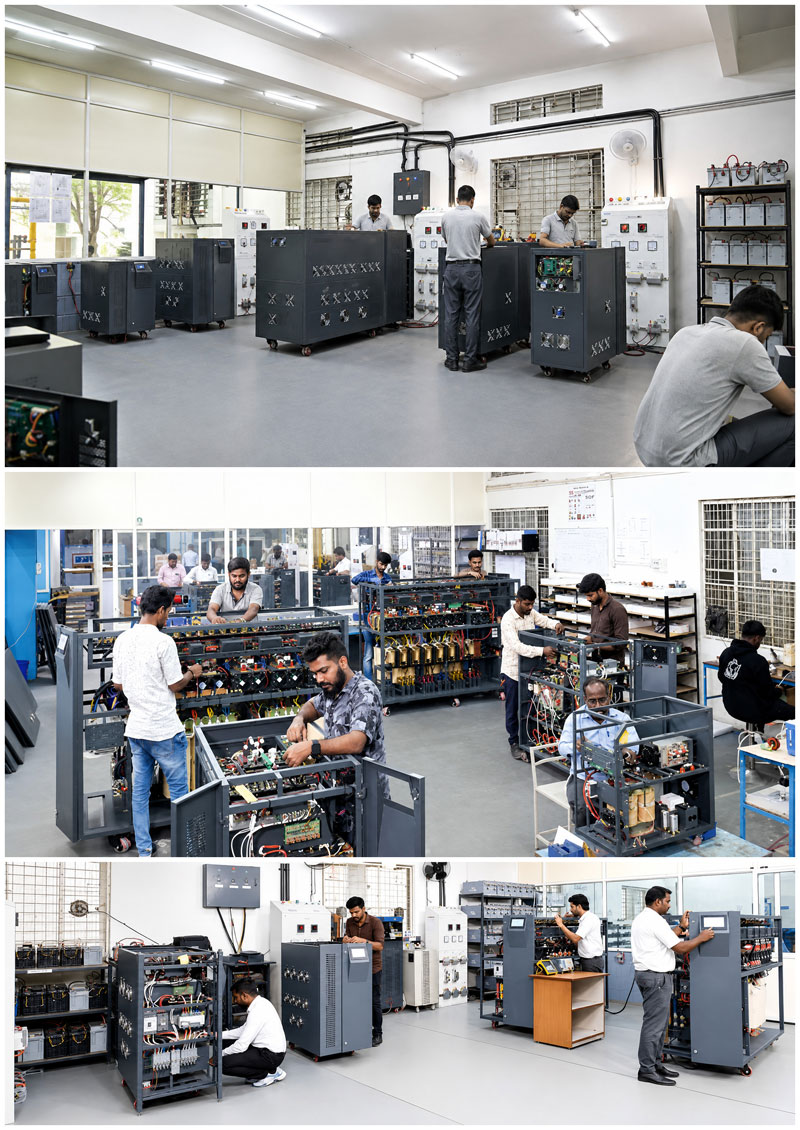
Concept and R&D
Application engineering
Manufacturing
Testing /FAT
Designed, Engineered & Manufactured in India
Arvi Systems has an in-house R&D and power electronics engineering team with end-to-end capability covering product concept, hardware and control design, application engineering, prototyping, customization, manufacturing and testing.
This gives us the flexibility to engineer the Static Frequency Converter around the application rather than expecting every application to fit into a standard product.
We can suitably customize the SFC to your specific application
Share your requirement for our evaluationApplication-specific requirements
Based on these inputs, the SFC capacity and configuration can be engineered to suit the actual operating requirement.
Why Choose Arvi Systems?
Industrial-Grade Construction & Serviceability
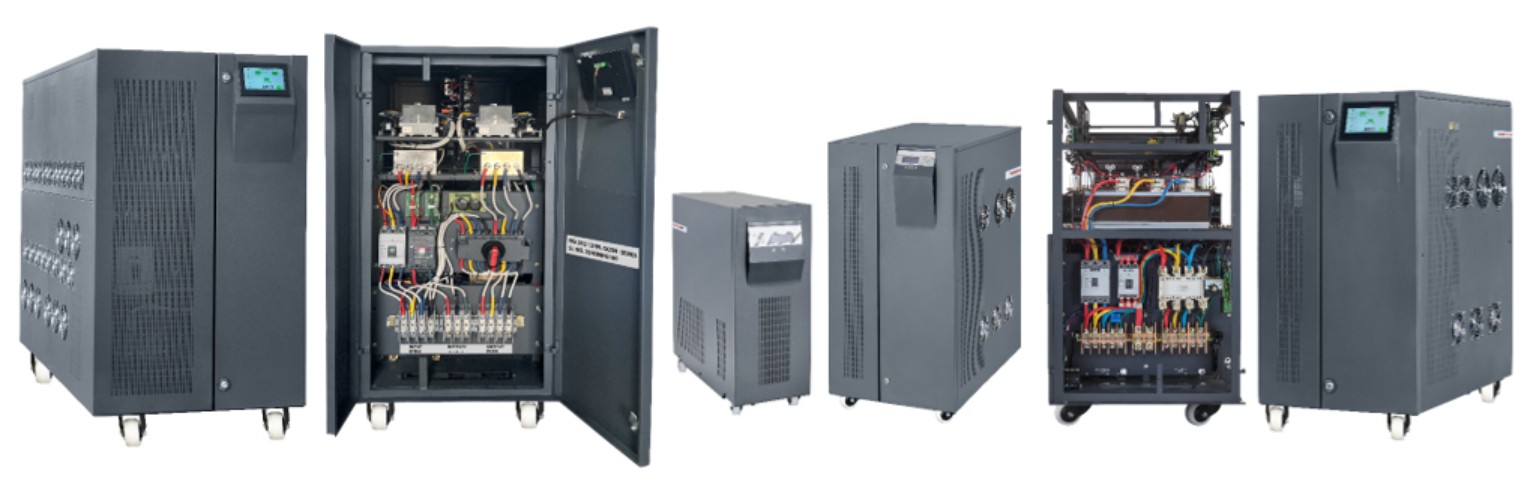
Industrial-Grade Design for 10–12 Years of Product Life
- Our Static Frequency Converters are designed with a target operating life of approximately 10–12 years, subject to operating environment, loading and recommended preventive maintenance.
- Long product life is not useful without long-term support.
- Therefore, our philosophy is not simply to manufacture and dispatch an SFC. We remain committed to supporting the product through its intended operating life, with long-term service, technical assistance and spare support extending up to 10–12 years.
- For customers operating critical production or testing facilities, this provides greater confidence in the long-term maintainability of the system.
DSP-Based Single-Control-Card Architecture
Our Static Frequency Converters use a DSP-based digital control architecture designed around a simplified single control card.
Reducing unnecessary control-card complexity helps improve maintainability and simplifies fault diagnosis and servicing.
Serviceable components are arranged for easier accessibility so that routine inspection, preventive maintenance and component replacement can be carried out efficiently.
The objective is simple: Make the SFC reliable to operate—and practical to maintain throughout its life.
Technical & Basic Maintenance Training for Your Personnel
We provide technical and basic maintenance training to your designated personnel, enabling them to understand the Static Frequency Converter, carry out routine checks and basic preventive maintenance, and handle minor operational or service issues whenever immediate attention is required. This helps improve first-level response, reduce dependency on external service support for minor issues, minimize service turnaround time and improve overall equipment uptime.
Wi-Fi Based Smartphone Monitoring App
Our Wi-Fi based smartphone monitoring app gives you pre-alarm and pre-trip alerts and notifications, providing early insights into the health and operating condition of the Static Frequency Converter. This enables your maintenance team to take preventive and proactive action before a developing condition results in an unexpected shutdown - helping improve SFC uptime, availability and overall operational reliability.
Factory Testing & FAT
Static Frequency Converters can be tested at our facility before dispatch according to the agreed application and test requirements.
Customers can participate in Factory Acceptance Testing (FAT) where applicable.
This allows the system configuration and key operating parameters to be verified before the equipment reaches the installation site.
For customized and critical applications, this provides additional confidence that the supplied SFC has been engineered and tested for the intended requirement.
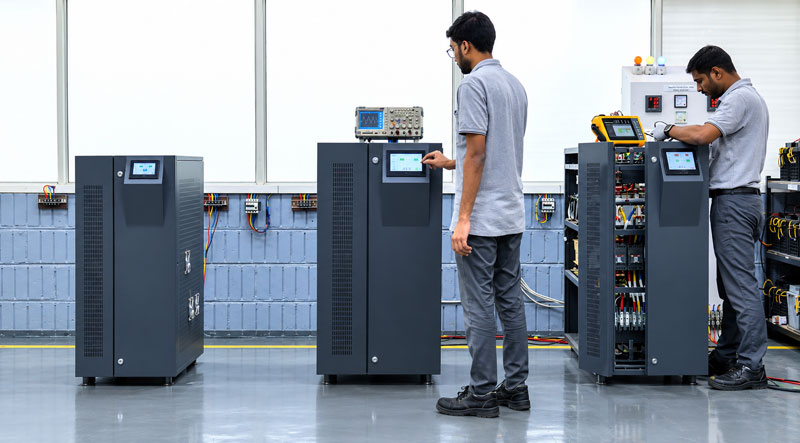
High-Efficiency, Industrial-Grade Design Engineered for Long-Term Reliability
A Static Frequency Converter used in an industrial or testing environment is expected to operate reliably for years.
That is why our design philosophy goes beyond merely meeting the required kVA, voltage and frequency specifications.
Our SFCs are engineered considering long-term reliability, serviceability, component accessibility, load behaviour and future product support. Reliability and efficiency are supported by the product architecture, application engineering and long-term maintainability—not by a marketing claim alone. The design objective is efficient power conversion with stable output voltage, frequency and waveform for demanding continuous-duty applications.
Share your requirement for our evaluationTesting Bay & Industrial Test Power
Static Frequency Converter for testing bay power supply
For manufacturers, this can function as a frequency converter for test benches, testing equipment, production lines, R&D laboratories and export-equipment validation. A dedicated constant-frequency power supply helps create the required 50 Hz, 60 Hz or 400 Hz electrical environment inside the factory.
A dedicated 50 Hz, 60 Hz or 400 Hz power source is essential when equipment has to be tested at a frequency different from the available factory supply.
Our Static Frequency Converters can create the required test power environment for:
- Factory Acceptance Testing
- Export Equipment Testing
- Product Development
- R&D Testing
- Burn-in Testing
- Functional Testing
- Motor and Transformer Testing
- Complete Machine Testing
- Performance Validation
- Pre-dispatch Testing
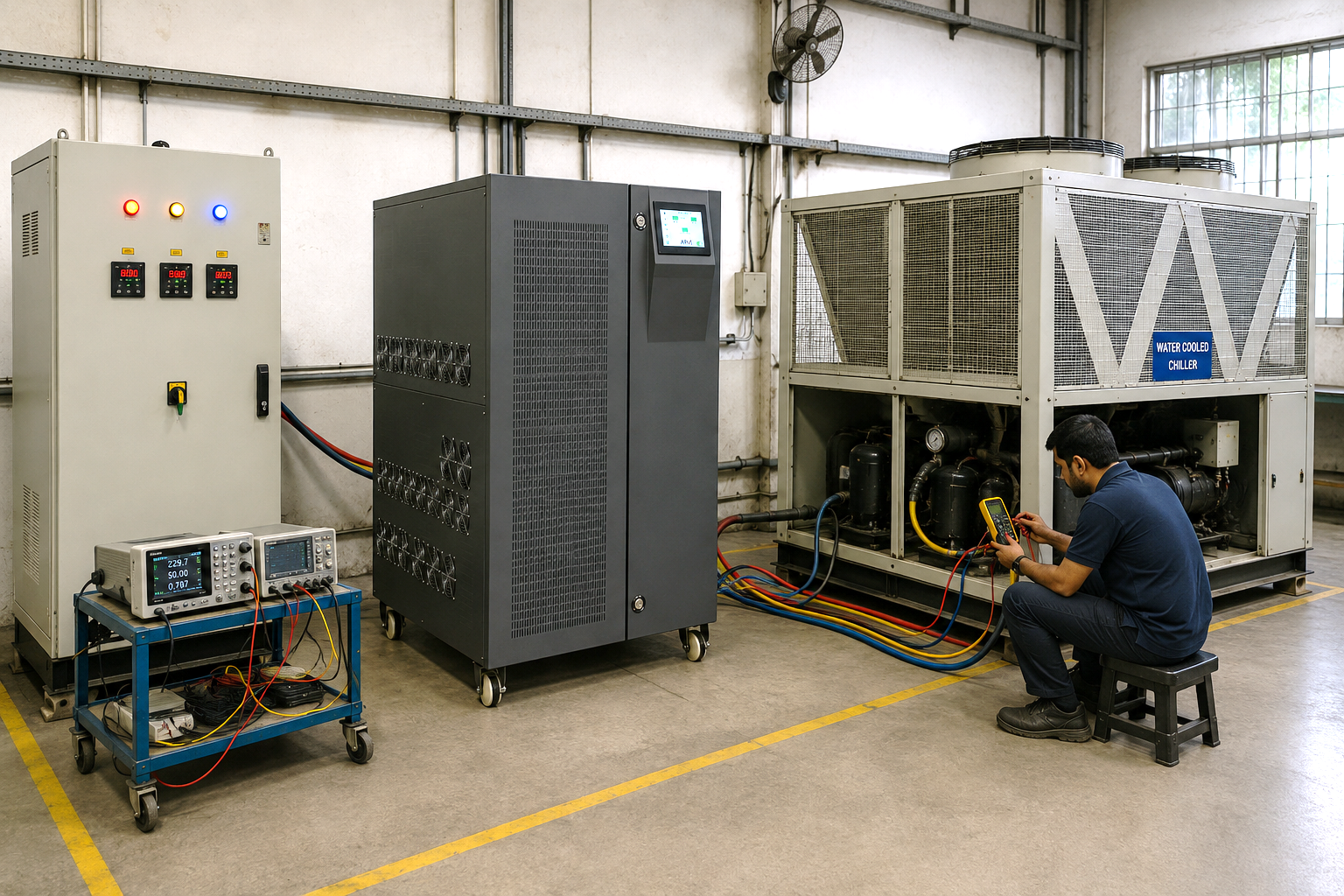
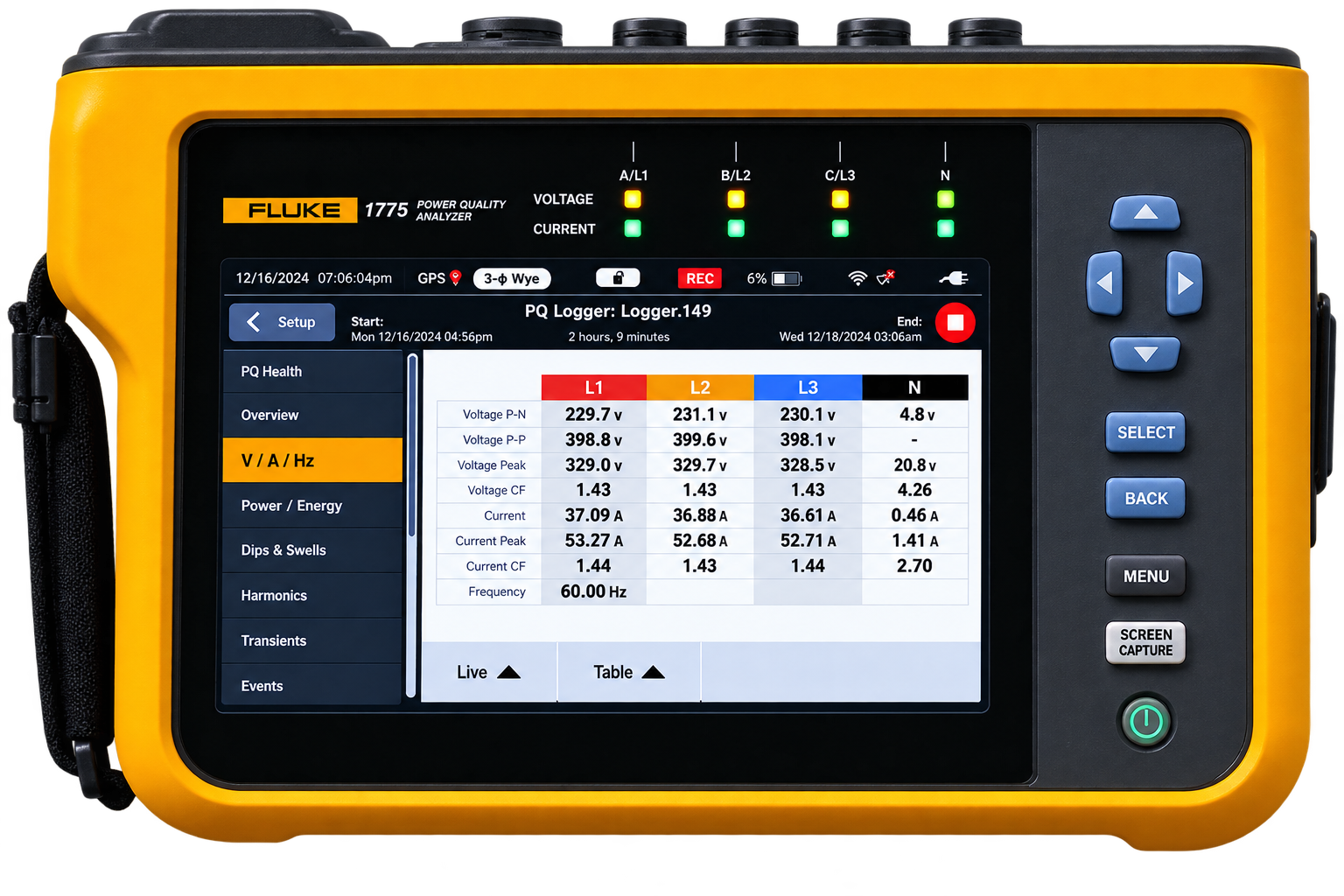
This enables manufacturers to test and validate the complete equipment at the required operating frequency before dispatch rather than depending on site conditions after installation.
Share your requirement for our evaluationApplication Engineering — More Than kVA Selection
Application Engineering – More Than kVA Selection
Understanding the connected load is critical because two loads having the same kVA rating may behave very differently electrically.
Motors can have high starting currents. Transformers can have high energization current. Compressors and chillers can impose sudden step loads. Electronic equipment can present nonlinear current characteristics.
Our engineering team studies the application and recommends the capacity and customization required to maintain stable performance under the actual operating conditions.
Motor Starting Current - A Critical Factor in SFC Capacity Selection
Selecting the capacity of a Static Frequency Converter (SFC) for motor loads requires more than simply considering the normal running kW, kVA or current of the connected equipment.
Motor starting can create a rapid, near-vertical rise in RMS current demand, and the SFC must have sufficient current-delivery capability to support this demand throughout the complete motor-starting period.
As an engineering reference, an appropriately designed Static Frequency Converter may be configured to handle approximately 200% of its rated current for up to 1 second. However, this overload capability must be evaluated against the actual motor-starting RMS current and its duration.
Starting Current Depends on the Type of Motor Starter
The starting-current requirement can vary significantly depending on the starting method.
Direct-On-Line (DOL) / Direct Starting
A motor starting directly on line can typically demand approximately 8 to 12 times its normal running current. For conservative SFC sizing, the 12x starting-current condition should be considered as the worst-case engineering basis, unless actual measured starting-current data is available.
Star-Delta Starting
With a star-delta starter, the starting and transition current requirement may typically be considered in the range of approximately 5 to 6 times the motor running current, depending on the motor and application. Particular attention must be given to the star-to-delta transition, during which a significant current peak can occur.
Therefore, the type of motor starter and the actual starting-current profile are critical inputs for selecting the appropriate SFC capacity.
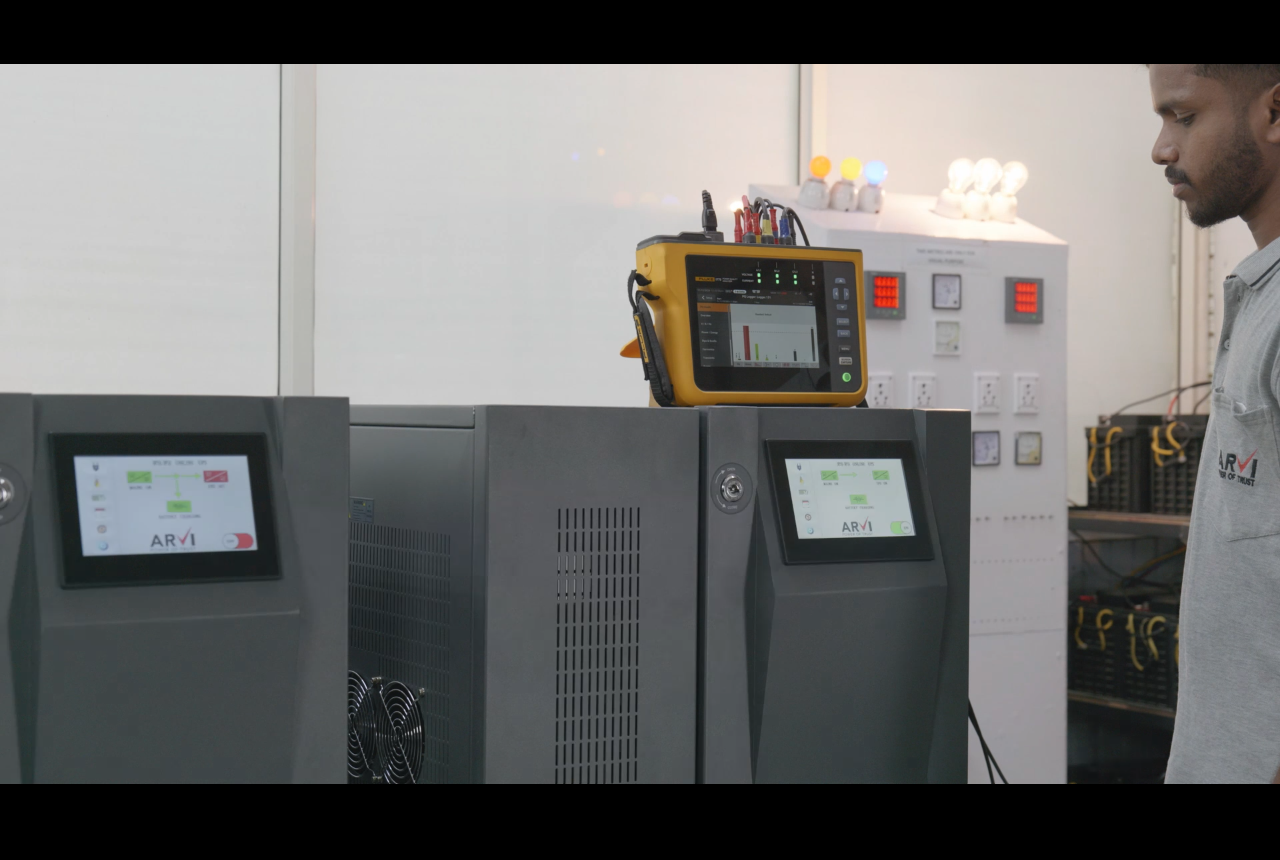
Motor Starting Current Is Not a Surge Current
This distinction is extremely important when sizing a Static Frequency Converter.
The surge-current handling capability of an SFC should not be equated with its motor-starting current capability. A surge-current rating generally represents the ability of the power electronics to withstand a very brief current pulse, typically lasting only a few microseconds.
Motor starting is fundamentally different. During motor starting, the SFC may experience a steep rise in RMS current demand, which can remain at or close to its peak value for approximately 100-200 milliseconds or longer, before gradually tapering down as the motor accelerates. Depending on the motor, mechanical load and starting method, the complete starting event can extend up to approximately 1 second or more.
Therefore, this is a sustained peak RMS current requirement, not merely a momentary surge that appears and disappears within a few microseconds. An SFC surge-current specification in amperes cannot therefore be directly used as evidence that the same SFC can start a motor demanding an equivalent RMS starting current.
The Complete SFC Power Stage Must Support the Starting Current
During motor starting, the required RMS current has to physically pass through the complete power-conversion path of the Static Frequency Converter.
Accordingly, the power semiconductor / switching devices, inverter power stage, AC chokes / inductors, isolation or output transformer where applicable, AC capacitors, output filters, busbars, cables and other current-carrying components must be appropriately engineered to withstand and deliver the required RMS starting current for the relevant duration.
This is why motor-starting capability cannot be determined purely from a momentary surge-current specification.
Engineering Basis for SFC Capacity Calculation
Step 1 - Determine the Motor Running RMS Current
- Identify the actual rated or normal running current of the motor.
Step 2 - Determine the Starting Method
- Establish whether the motor uses DOL / direct starting, star-delta starting, VFD, soft starter or another starting method.
Step 3 - Calculate the Peak RMS Starting-Current Requirement
- For DOL starting:
- Starting RMS Current = Motor Running Current x 8 to 12
- For worst-case sizing:
- Starting RMS Current = Motor Running Current x 12
- For star-delta starting:
- Starting / Transition RMS Current = Motor Running Current x approximately 5 to 6
- The star-to-delta transition should also be considered when evaluating the maximum current requirement. Where measured starting-current data or a manufacturer-defined starting profile is available, the actual data should preferably be used.
Step 4 - Match the Starting RMS Current with the SFC Overload Capability
- If the SFC is designed to provide 200% of rated current for 1 second:
- Minimum SFC Rated Current = Required Peak RMS Starting Current / 2
- For example, if the calculated motor-starting requirement is 300 A RMS, an SFC capable of delivering 200% current for the required duration would theoretically require a rated output current of at least:
- 300 A / 2 = 150 A rated SFC current
- However, selecting the SFC exactly at this theoretical limit is not recommended.
Step 5 - Provide 25-30% Engineering Buffer
- A further 25-30% capacity buffer should preferably be maintained over the calculated minimum requirement. This prevents the Static Frequency Converter from repeatedly operating at or very close to its maximum overload threshold every time the motor starts.
- Recommended SFC Capacity = Calculated Minimum Capacity + 25-30% Engineering Buffer
- Using the previous example:
- Peak motor-starting RMS current = 300 A
- SFC 200% current capability -> Minimum rated current = 150 A
- Adding 25-30% engineering buffer -> Recommended rated current = approximately 188-195 A
- The corresponding SFC kVA capacity can then be selected based on the required output voltage, phase configuration and rated output current.
The star-to-delta transition should also be considered when evaluating the maximum current requirement. Where measured starting-current data or a manufacturer-defined starting profile is available, the actual data should preferably be used.
Why the Engineering Buffer Matters
A motor may start hundreds or thousands of times during the operating life of the system. The objective should therefore not be merely to demonstrate that the SFC can start the motor once under ideal conditions.
The SFC should be engineered so that repeated motor starting does not continuously push the inverter and associated power components to their threshold operating limits.
Providing appropriate capacity headroom helps improve long-term reliability, thermal margin, power semiconductor stress margin, repetitive motor-starting capability, output voltage stability, waveform stability, frequency stability and overall SFC operating life.
Key Sizing Principle
Do not size a Static Frequency Converter for a motor application based only on the normal running kW, kVA or current.
The SFC capacity should be selected based on the motor starter type, peak RMS starting-current requirement, duration of that current demand, other loads remaining connected during starting, and the SFC's duration-specific RMS overload capability.
The final selection should include an appropriate 25-30% engineering buffer, ensuring that the Static Frequency Converter can maintain stable voltage, waveform and output frequency during every motor-starting cycle without repeatedly reaching its threshold current-delivery capability.
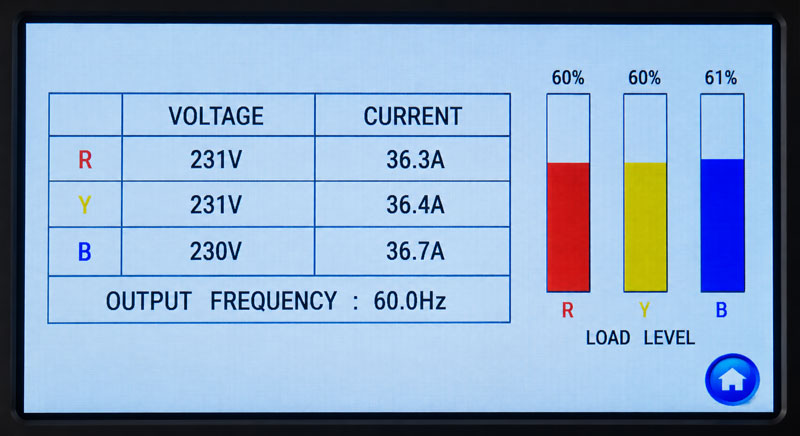
We believe a specialized power product should remain serviceable, supportable and maintainable throughout its intended operating life.
Reliable & High-Efficiency Static Frequency Converter Manufacturer in Bangalore, India
As an industrial frequency converter manufacturer and SFC manufacturer in India, Arvi Systems supports customized static frequency converter requirements across different voltage, frequency, kVA and application needs. Customers looking for a 50Hz to 60Hz converter manufacturer, 60Hz to 50Hz converter manufacturer or 400Hz frequency converter manufacturer in India can share the actual load and operating requirement for application-specific engineering.
Our solutions cover:
The range includes industrial AC frequency converter systems, three-phase frequency converters, fixed / constant-frequency AC power sources and customized high-power frequency conversion systems for machinery, laboratories, test facilities, aviation and aerospace applications.
Share your power supply requirement
Details required from the client
Our engineering team can study the load and recommend an appropriate 50 Hz, 60 Hz or 400 Hz Static Frequency Converter configuration.
Arvi Systems – Highly Reliable, High-Efficiency Industrial Static Frequency Converters & 400 Hz Aircraft Ground Power Solutions, Designed and Manufactured in Bangalore, India.
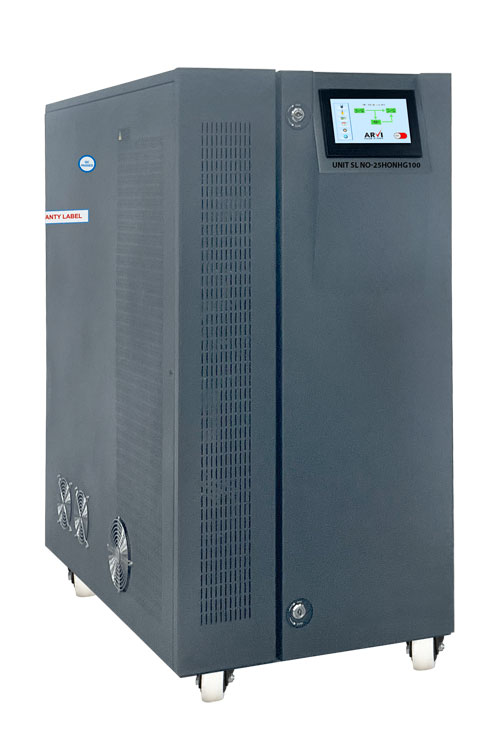


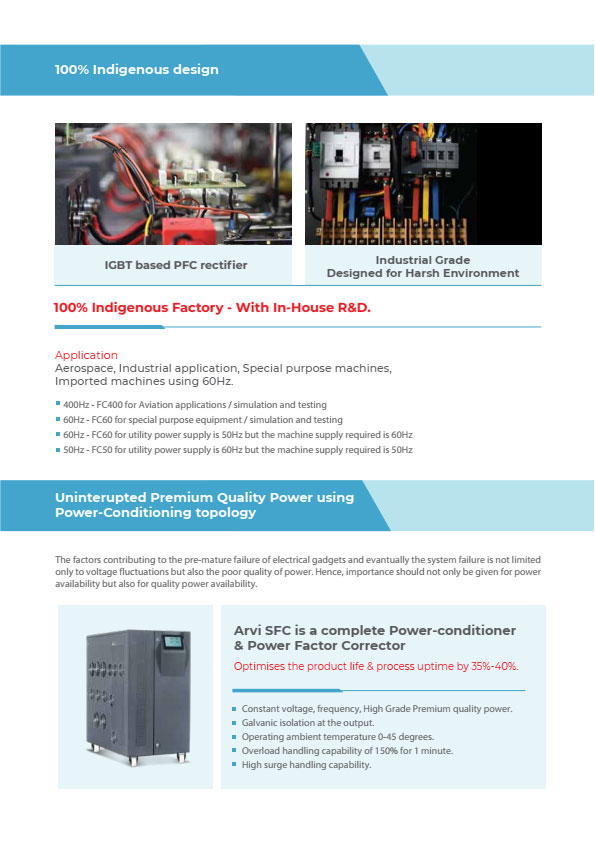
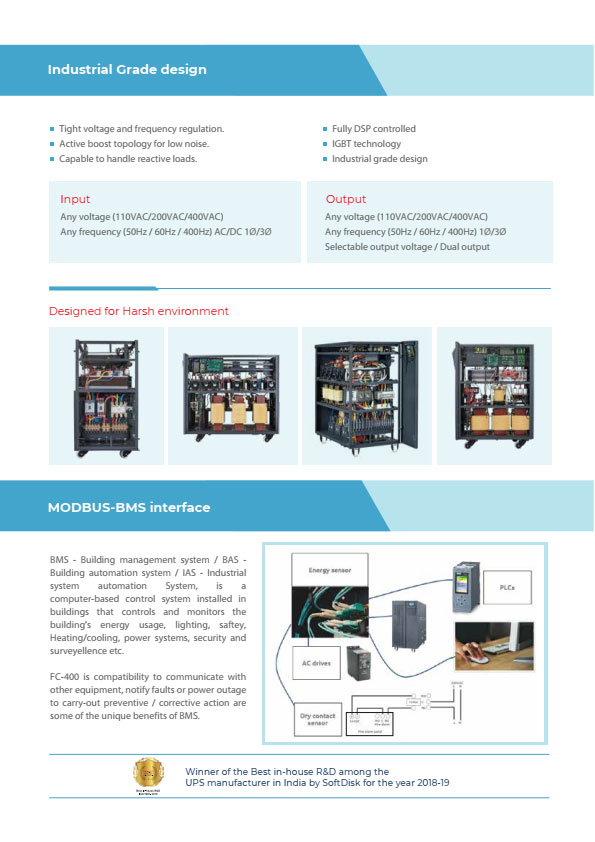
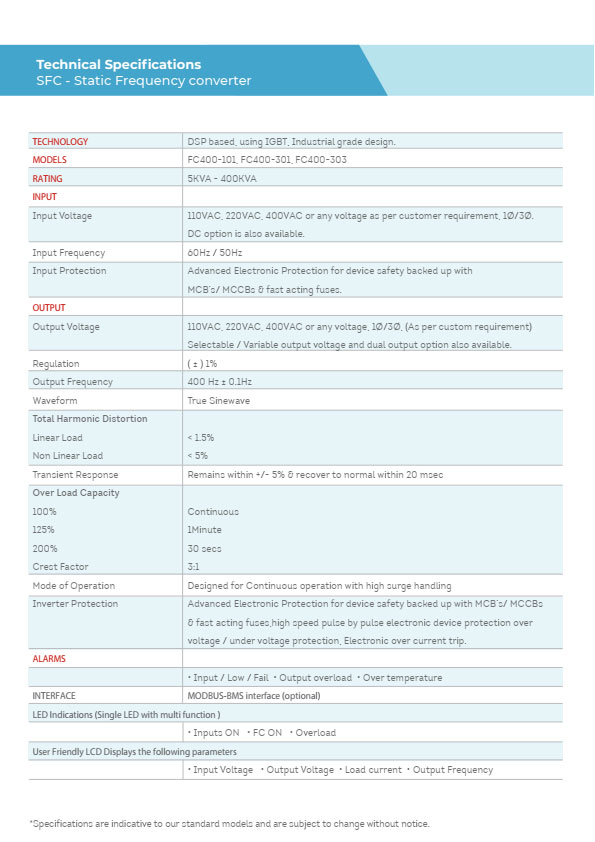


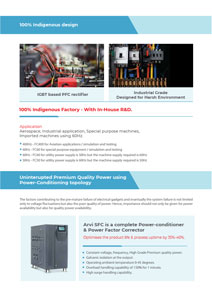
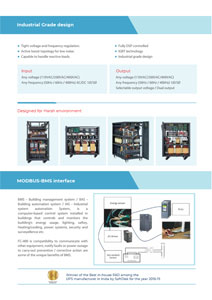
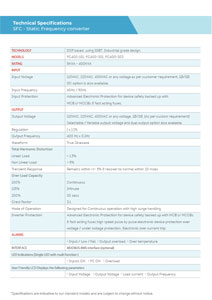
Application
- Aviation
- Industrial application
- Simulation and testing
- Special power supply requirement equipment.

FC400 - 400HZ frequency converter
60FC50 - 50HZ frequency converter
50FC60 - 60HZ frequency converter
FC400 - 400HZ frequency converter
60FC50 - 50HZ frequency converter
50FC60 - 60HZ frequency converter
PRESTIGIOUS CUSTOMER LIST
Frequency Converter FC 60 & FC400 303
| CUSTOMER NAME | CONTACT PERSON | LOCATION | CAPACITY | TYPE OF INDUSTRY |
|---|---|---|---|---|
INDUS COFFEE | Mr. Manish | NELLORE | 15KVA | 3Phase motor Induction |
SUN MOBILITY | Mr. Vikas | Mahadevapura | 50KVA | EV charging machine |
THALE GROUP | Mr. Tripathi Ashwin | Richmond Circle | 60KVA-2no’s | Aerospace monitor |
VEELINE INDUSTRIES | Mr. Davinder Singh | GUJURAT | 30KVA | Server |
Nikhara Global Logic | Mr. Kiran Kumar | K.R. Puram | 30KVA | Server/IT load |
SIKA | Mr. Mohan Kumar | Bommasandra | 7.5KVA | Aerospace H.F motors |
ZIMPLASTIC | Mr. Yallapa | Sarjapura | 5KVA | Measuring Equipments |
Scalene Livprotec | Mr.Mandeep | Mysore | 40KVA | Water Purification |
SUN LUX | Mr. Ramesh | Bommasandra | 5KVA | Lab Equipments |
CHEFX Labs | Mr.Palnisamy | Sarjapura | 5KVA | Food Robot machine |


